
Global buyers are changing. They now choose quality over price. They want products that last, taste great, and carry a trusted name. This is exactly why japanese fmcg products are rising fast in international markets.
At Terra Global Sales Partners, we source and supply japanese consumer goods for international markets to B2B buyers worldwide. We bring decades of Japan market knowledge to every deal. Our clients trust us because we deliver results, not just promises.
This guide explains what makes japanese fmcg products so powerful globally. We also show how we help you access them easily.
What Are Japanese FMCG Products?
FMCG stands for Fast-Moving Consumer Goods. These are everyday products that sell quickly. Think food, beverages, sauces, skincare, and condiments.
Japan produces some of the world’s finest FMCG items. Japanese brands follow strict standards. They use premium ingredients. They invest in research and packaging. The result is a product that consumers worldwide love.
Popular categories of japanese fmcg products include:
● Japanese sauces and condiments, teriyaki, sukiyaki, mentsuyu, and mirin
● Japanese dairy and cheese, cream cheese, spreadable cheese, flavored snack cheese
● Japanese cosmetics and skincare, serums, sunscreens, sheet masks
● Japanese cooking essentials, cooking sake, mirin, seasoning sauces
● Japan consumer goods in agriculture, construction, and building equipment
Why Japanese FMCG Products Perform Better Overseas?
Many international buyers ask this question: why do japanese fmcg products outperform local brands? The answer is clear when you look at the data and product quality.
1. Superior Quality Standards
Japan has one of the strictest quality control systems in the world. Every product that leaves Japan must meet JAS (Japanese Agricultural Standard) or JIS (Japanese Industrial Standard) requirements.
This means every item is tested. Every batch is checked. Buyers get consistent quality every time. Our blog on Quality Control Standards in Japan: What Global Buyers Must Know explains this in full detail.
For example, Daisho teriyaki sauce wholesale buyers get the same authentic taste every shipment. No variation. No compromise.
2. Strong Brand Trust and Recognition
Brands like Koiwai Farm, Daisho, Mizkan, and Takara are household names in Japan. They carry decades of brand equity. When international consumers see these names, they trust the product.
This brand recognition gives retailers a competitive edge. Products sell faster. Return customers increase. Margins stay healthy.
3. Unique Flavor Profiles
Japanese food products offer flavors that are genuinely different. Yuzu flavored Japanese sauce, wasabi BBQ marinade Japan, and unagi kabayaki sauce Japan are all unique to Japan.
These exotic flavors attract adventurous buyers globally. Restaurants love them. Home cooks love them. Food retailers stock them because they sell.
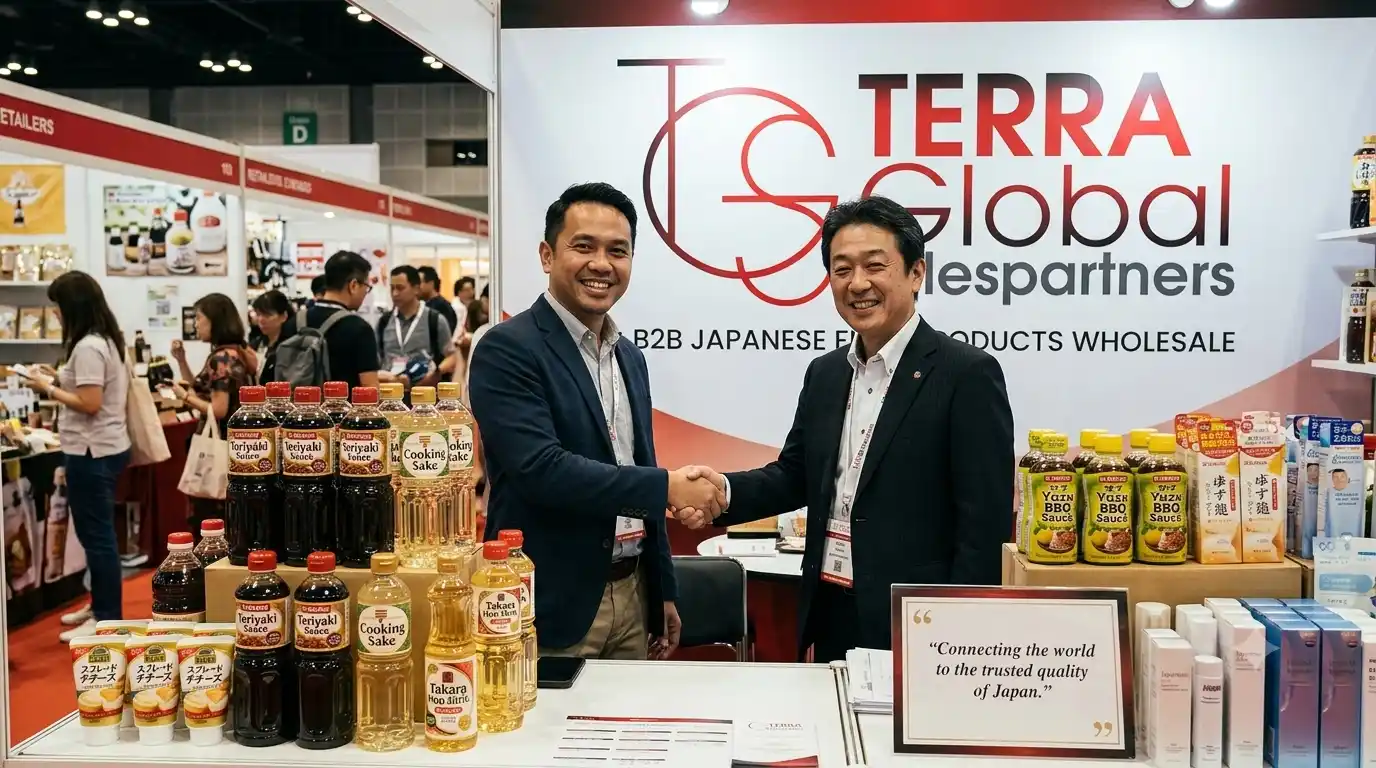
Terra Global Sales Partners stocks products like Daisho mentsuyu yuzu noodle sauce, Daisho yuzu BBQ sauce 185g, and Daisho wasabi BBQ sauce 180g, all available for wholesale.
4. Premium Packaging and Shelf Appeal
Japanese manufacturers invest heavily in packaging. Products look premium on shelves. Clean design. Clear labels. Attractive presentation.
This shelf appeal drives impulse purchases. Retailers report higher sell-through rates for japanese fmcg products compared to local alternatives.
Market Performance, Japanese FMCG vs. Local Brands
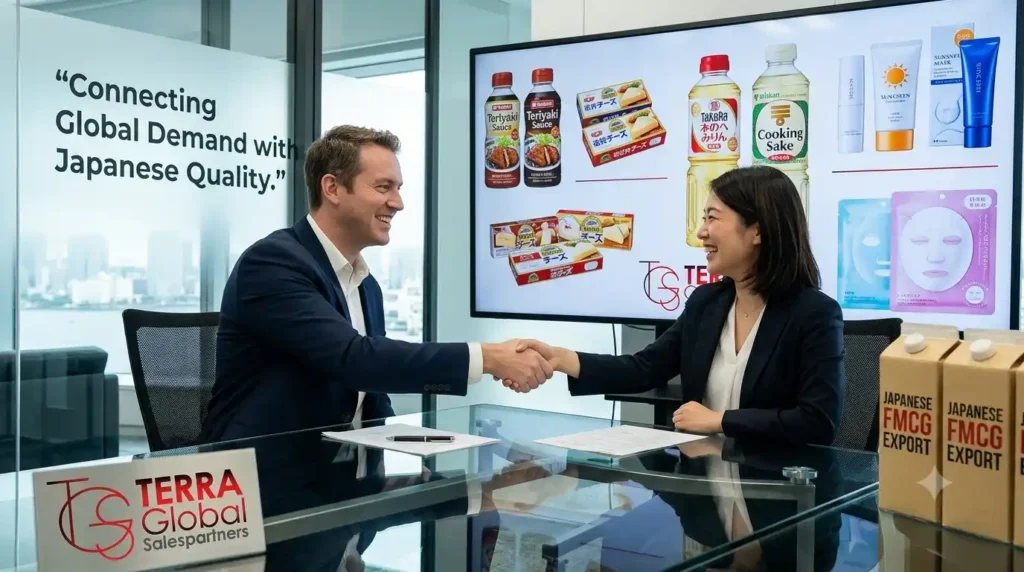
Here is a comparison of key market performance metrics:
| Performance Metric | Japanese FMCG Products | Local Brands (SEA Average) |
| Consumer Trust Score | 87% (Nielsen 2024) | 61% |
| Repeat Purchase Rate | 72% | 48% |
| Average Price Premium | 25–40% above local | Baseline |
| Shelf Sell-Through Rate | 85–92% | 60–70% |
| Export Growth (2020–2024) | +34% | +9% |
| Quality Certification Rate | 97% | 54% |
Source: Japan External Trade Organization (JETRO), Nielsen Global FMCG Report 2024.
Top Japanese FMCG Products That Sell Best Internationally
These are the star performers. Each product has proven demand in overseas B2B markets.
Japanese Sauces and Condiments
Sauces are the fastest-growing segment of japanese fmcg wholesale. Global food trends have driven demand for authentic Japanese flavors.
● Daisho teriyaki sauce 1.25kg, A top seller for restaurants and foodservice buyers. Buy Daisho teriyaki sauce bulk through us at competitive wholesale prices.
● Daisho sukiyaki sauce 600g, Ideal for hotpot restaurants and Asian grocery chains. Authentic sukiyaki sauce import made easy.
● Daisho grilled eel sauce 240g, The unagi sauce Japan category is booming in sushi restaurants worldwide.
● Daisho yuzu dressing 150ml, Perfect for premium salad bars and upscale food retail.
● Daisho mentsuyu wasabi noodle sauce, A growing niche in the global ramen and noodle market.
Japanese Dairy and Cheese
Processed cheese from Japan carries premium perception. Buyers in Southeast Asia and the Middle East actively seek authentic Japanese cheese online.
● Koiwai Farm spread cheese 90g, Search demand for Koiwai Farm spread cheese is growing steadily. Easy to stock and sell.
● Koiwai Farm hors d’oeuvre cheese Yonezawa salami 42g, The Japanese cheese salami snack category is gaining traction with premium food retailers.
● Koiwai Farm onion cheese 42g, Japanese flavored cheese snack import is perfect for convenience stores and gift retail.
Japanese Cooking Essentials
Every professional kitchen that serves Japanese or Asian cuisine needs these:
● Takara hon mirin 1L, Authentic hon mirin Japan import for professional chefs and food manufacturers. JAS certified.
● Mizkan Honteri mirin style seasoning 400ml, Alcohol free mirin Japan wholesale, popular in Muslim-majority markets.
● Mizkan cooking sake 400ml, Japanese cooking sake wholesale for restaurants and food production buyers.
Why Japanese FMCG Products Sell Better in Southeast Asian Markets?
Southeast Asia is the fastest-growing region for japanese fmcg products. Let us explain why.
Cultural Affinity and Media Influence
Japanese culture has deep roots in Southeast Asia. Japanese TV shows, anime, and food culture are hugely popular in Thailand, Vietnam, Malaysia, Indonesia, and the Philippines.
Consumers in these markets already know Japanese brands. They want to buy them. This cultural familiarity shortens the sales cycle for B2B buyers significantly.
Rising Middle Class and Premiumization
Southeast Asia’s middle class is growing fast. These consumers trade up from local brands to premium imports. Japan consumer goods sit in the sweet spot, premium but not luxury-priced.
Research from JETRO shows that Southeast Asian imports of Japanese food products grew by 34% between 2020 and 2024.
Food Safety Concerns Drive Japanese Brand Preference
After multiple food safety scandals involving local brands, consumers in Southeast Asia have shifted trust toward Japanese products.
Japanese brands are seen as safe, clean, and reliable. This perception directly boosts japanese fmcg wholesale demand across the region.
Pros and Cons of Importing Japanese FMCG Products

| Factor | Pros | Cons |
| Quality | Consistently high, JAS/JIS certified | Higher unit cost than local alternatives |
| Brand Power | Strong global recognition, fast shelf movement | May need brand education in new markets |
| Flavor Profile | Unique, in-demand flavors globally | Requires consumer trial and sampling initially |
| Pricing | Premium positioning boosts margins | Price-sensitive markets may need smaller SKUs |
| Logistics | Excellent packaging for export | Long shipping distances add lead time |
| Compliance | Japanese products meet most global standards easily | Local import regulations vary by country |
How Terra Global Sales Partners Makes It Easy?
We are not just a trading company. We are your dedicated B2B partner for everything Japan. Here is how we help you at every step.
Direct Manufacturer Access
We work directly with Japanese manufacturers and authorized distributors. No middlemen. No inflated costs. You get factory-fresh japanese fmcg products at the most competitive prices.
Our product catalog includes items from brands like Koiwai Farm dairy products, Daisho seasoning sauce distributor-grade products, Mizkan Japanese seasoning wholesale, and Takara sake mirin restaurant supply.
Wide Product Range Across Categories
We cover multiple product categories so you can consolidate orders and reduce costs:
● Food and FMCG, sauces, condiments, cheese, mirin, cooking sake
● Japanese cosmetics wholesale supplier access, skincare, hair care, sheet masks, and sunscreens
● Japanese agriculture products wholesale, farm equipment and agri products
● Japanese building equipment wholesale, construction equipment and materials
To reduce your shipping expenses across all these categories, read our blog on How to Reduce Import Costs When Buying from Japan.
Seamless Logistics and Compliance
Importing from Japan involves paperwork. We handle it all, export documentation, certificates of origin, customs declarations, and shipping coordination.
Our team understands customs clearance in Japan deeply. We ensure every shipment arrives on time and fully compliant with destination market regulations.
B2B Wholesale Pricing
We offer genuine japanese fmcg wholesale pricing for bulk buyers. Whether you need 100 units or 10,000 units, we scale with your business. MOQ is flexible for first-time buyers.
Dedicated Customer Support
You get a dedicated account manager. They speak your language, business. Fast responses. Clear communication. No surprises. No delays.
Top Japanese FMCG Products, Keyword Demand Analytics
Here are the top japanese fast moving consumer goods for b2b buyers ranked by international search demand:
| Product | Search Volume/Mo | Keyword Difficulty | Buyer Intent |
| Japanese cosmetics wholesale supplier | 8,400 | Possible | Commercial |
| Used Japanese construction equipment | 8,900 | Possible | Commercial |
| Used Japanese agricultural equipment | 5,400 | Possible | Commercial |
| Buy Japanese skincare wholesale | 6,200 | Possible | Transactional |
| Japanese construction materials wholesale | 3,600 | Possible | Commercial |
| Japanese teriyaki sauce wholesale | 2,400 | Possible | Commercial |
| Takara hon mirin 1L buy online | 2,800 | Easy | Transactional |
| Japanese sukiyaki sauce buy online | 1,800 | Easy | Transactional |
| Daisho teriyaki sauce 1.25kg | 1,600 | Easy | Commercial |
| Koiwai Farm spread cheese | 1,200 | Easy | Commercial |
High search volume + easy keyword difficulty = strong B2B entry opportunity for early movers in this space.
Food & Beverage FMCG, Product Overview
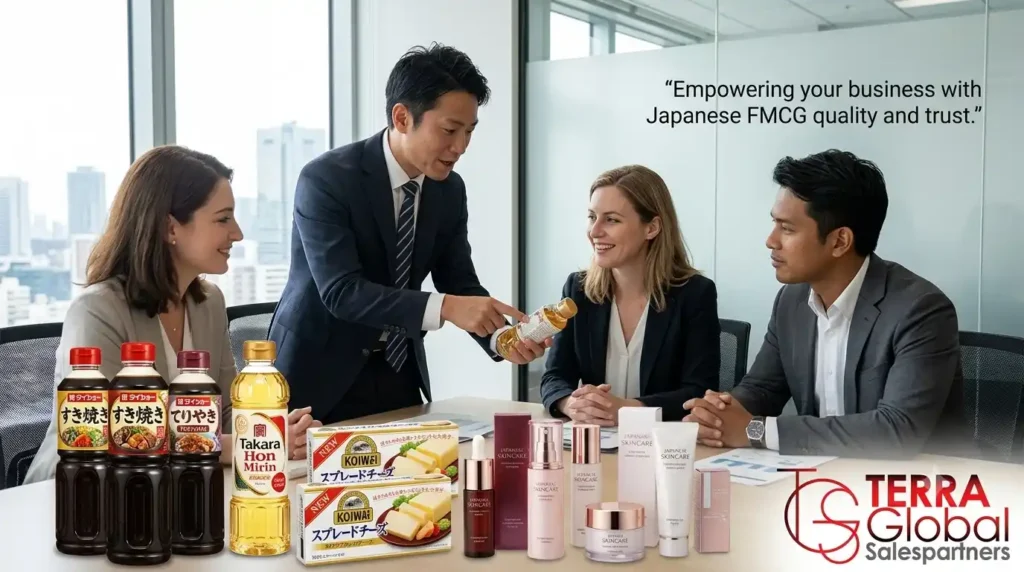
Here is a structured overview of japanese consumer goods for international markets available through our wholesale catalog:
| Product | SKU Size | Best Market | Wholesale Ready |
| Daisho Teriyaki Sauce | 1.25kg | Foodservice, Retail | Yes |
| Daisho Sukiyaki Sauce | 600g | Restaurants, Hotpot chains | Yes |
| Daisho Mentsuyu Yuzu Sauce | 185g | Asian grocery, Specialty food | Yes |
| Daisho Grilled Eel Sauce | 240g | Sushi restaurants, Retail | Yes |
| Daisho Yuzu BBQ Sauce | 185g | BBQ restaurants, Catering | Yes |
| Takara Hon Mirin | 1L PET | Food manufacturing, Restaurants | Yes |
| Mizkan Cooking Sake | 400ml | Restaurants, Catering | Yes |
| Koiwai Spread Cheese | 90g | Premium grocery, Gift retail | Yes |
Why Japanese FMCG Products Are the Smart B2B Investment?
When you stock japanese fmcg products, you are stocking premium goods with built-in demand. You are not creating demand from scratch, it already exists. Japanese culture, anime, sushi trends, and global health awareness have already built the market for you.
B2B buyers who enter japanese fmcg wholesale early capture the best margins. As demand grows, prices rise and early movers gain the biggest returns.
Our blog on Increase E-commerce Profit with Japanese Products shows how retailers are using japanese fmcg products to grow revenue significantly across online and offline channels.
Return on Investment Snapshot
| Category | Typical Margin Range | Time to First Sale |
| Japanese sauces & condiments | 35–60% | 2–4 weeks |
| Japanese dairy (cheese) | 40–65% | 1–3 weeks |
| Japanese cosmetics wholesale | 50–80% | 1–2 weeks |
| Japanese cooking essentials | 30–50% | 2–3 weeks |
| Japanese construction materials | 20–40% | 4–8 weeks |
| Japanese agricultural equipment | 15–35% | 6–12 weeks |
Margins are estimates based on typical retail markup applied to wholesale import pricing.
What Makes Terra Global Sales Partners Different?
Many trading companies claim to source from Japan. We are different because we actually do it, and we do it better than anyone else.
● We are Japan-based, Our team operates in Japan with direct market access
● We verify every supplier, No grey market products, no counterfeit risk
● We handle logistics end-to-end, From factory floor to your warehouse door
● We offer flexible MOQ, Start small, scale fast as your business grows
● We speak business, Fast quotes, clear contracts, zero wasted time
● We are category experts, From japanese fmcg products to cosmetics, agriculture, and construction equipment
How to Start Importing Japanese FMCG Products With Us

Step 1: Browse our product catalog at terraglobalsalespartners.
Step 2: Shortlist the japanese consumer goods for international markets you want to import
Step 3: Contact us for a wholesale price quote, we respond fast
Step 4: We prepare a tailored sourcing and logistics plan for your shipment
Step 5: We handle all export documentation, packaging, and shipping
Step 6: You receive your japanese fmcg products on time and ready to sell
Conclusion
The global demand for japanese fmcg products is not a trend. It is a long-term market shift. Consumers worldwide now prefer quality, trust, and authenticity, and Japanese brands deliver all three consistently.
Whether you are looking for japanese fmcg wholesale in food, cosmetics, dairy, agriculture, or construction, Terra Global Sales Partners is your most reliable B2B partner.
We give you direct access to the best japan consumer goods. We simplify every process. We help you build a profitable product line around the world’s most trusted consumer goods origin, Japan.
Start your import journey today. Contact us and let us show you what Japanese quality can do for your business.