

Golden Week, Obon & New Year: How Japan’s Holiday Closures Affect Your Lead Times

Every spring, importers who ignore Golden Week watch their lead times explode. A container booked for early May can sit at the port for two extra weeks while Japanese companies shut their doors, and no amount of expediting reopens a factory on a national holiday. This guide maps every major closure on the 2026 calendar, […]
Cold-Chain Logistics: Importing Japanese Food That Needs Refrigeration

Japanese cheese, butter and premium seafood lose their value the moment temperature slips. For importers, cold chain logistics is the difference between fresh, sellable product and a container of waste. Every frozen food shipment from Japan depends on unbroken refrigeration from factory to final delivery. This guide explains how temperature-controlled supply chain planning works, what […]
LCL Consolidation in Japan: Combine Multiple Suppliers into One Cheaper Shipment
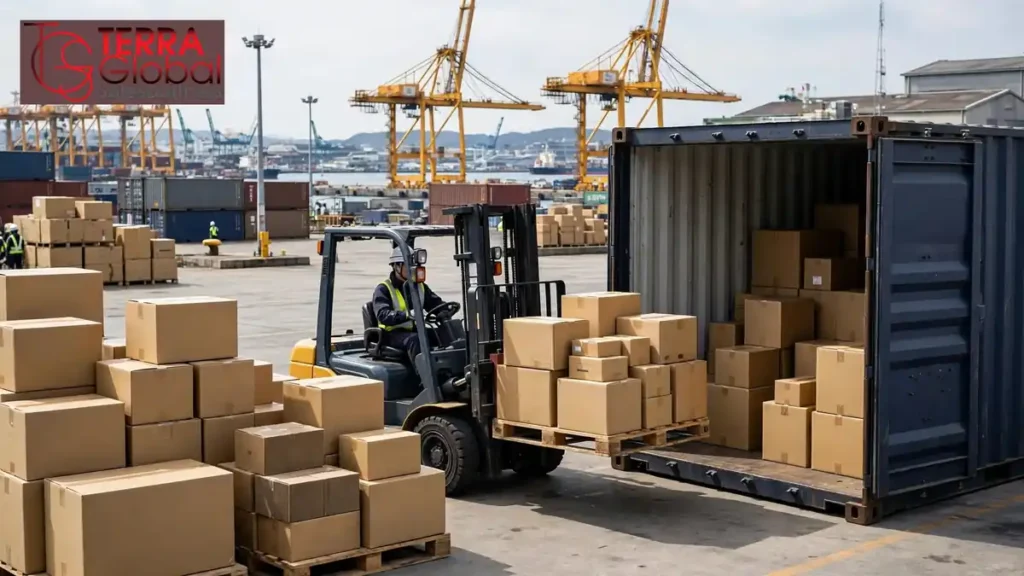
When you source from multiple suppliers across Japan, each factory ships a small batch of cargo and none can fill a full container on its own. LCL consolidation combines those batches into one shared box at the port, so you pay only for the volume your cargo occupies instead of paying for empty air. For […]
Incoterms 2026 for Japan Sourcing: EXW vs FOB vs DAP — Which One Actually Saves You Money?

A single wrong trade term on your commercial invoice can add thousands to a shipment from Japan. Incoterms are the international commercial terms that decide who pays for freight, who handles export paperwork and where risk transfer happens. For 2026, Incoterms 2026 remain the global standard, and picking the wrong one quietly inflates your landed […]
HS Codes for Japanese Imports: Classify Products Right and Stop Overpaying Duty

A single wrong digit in your HS codes can mean serious overpayment, or a penalty for underpayment. Classification errors are among the most expensive mistakes an importer can make, yet most are preventable. If you handle Japanese imports, mastering HS codes is the highest-ROI skill in your trade compliance toolkit. This guide shows how tariff […]
Japan’s Trade Agreements Explained: How the EU–Japan EPA, CPTPP and US–Japan Deals Cut Your Import Duties
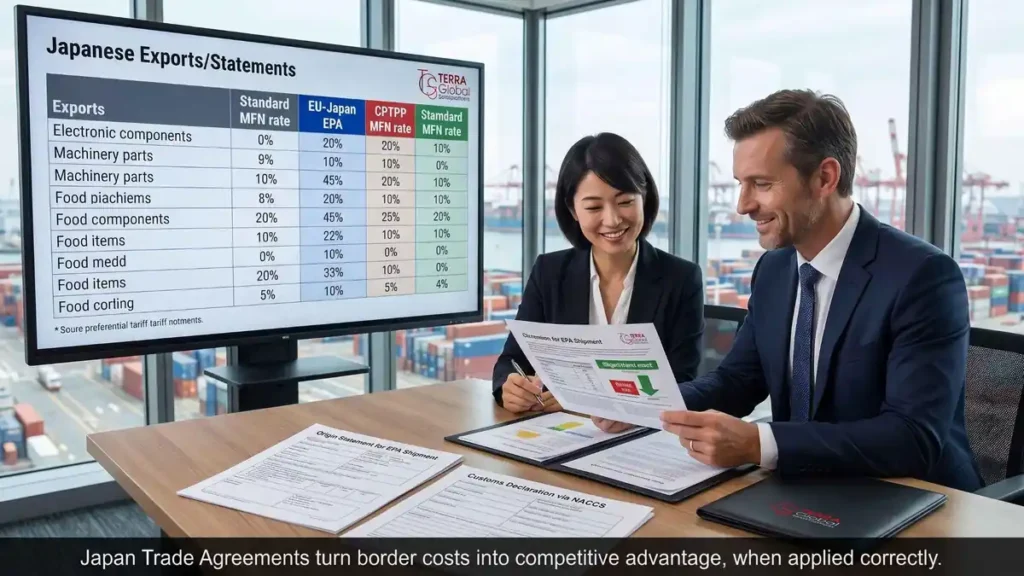
Every trade deal changes the math on import costs, and few markets offer importers as many advantages as Japan right now. Japan trade agreements like the EU-Japan Economic Partnership Agreement, the CPTPP, and the U.S.–Japan pacts have rewritten tariff schedules across sectors from automotive to agricultural products. If you import Japanese goods, Japan trade agreements […]
Japan to Europe Shipping: A Complete Guide for Wholesale Importers
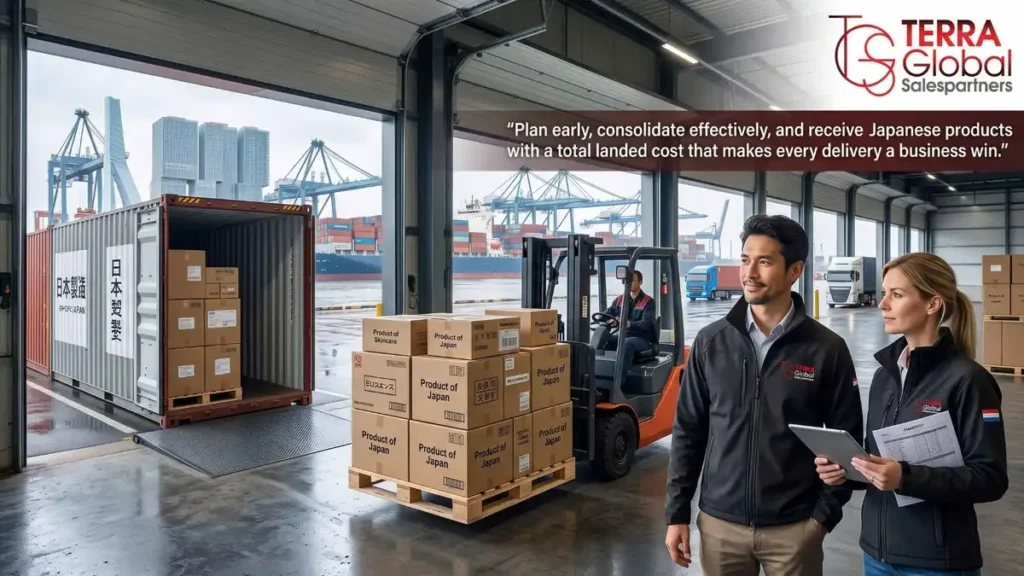
Europe’s shelves are filled with Japanese products, from skincare to snacks, and behind every pallet is a shipping from Japan plan that someone got right. For wholesale importers, shipping from Japan to Europe is a step-by-step guide in itself: choose the right shipping method, prepare export documentation from Japan, clear customs clearance, and manage last-mile […]
Warehousing in Japan: Costs, Options, and What to Look for in a Provider
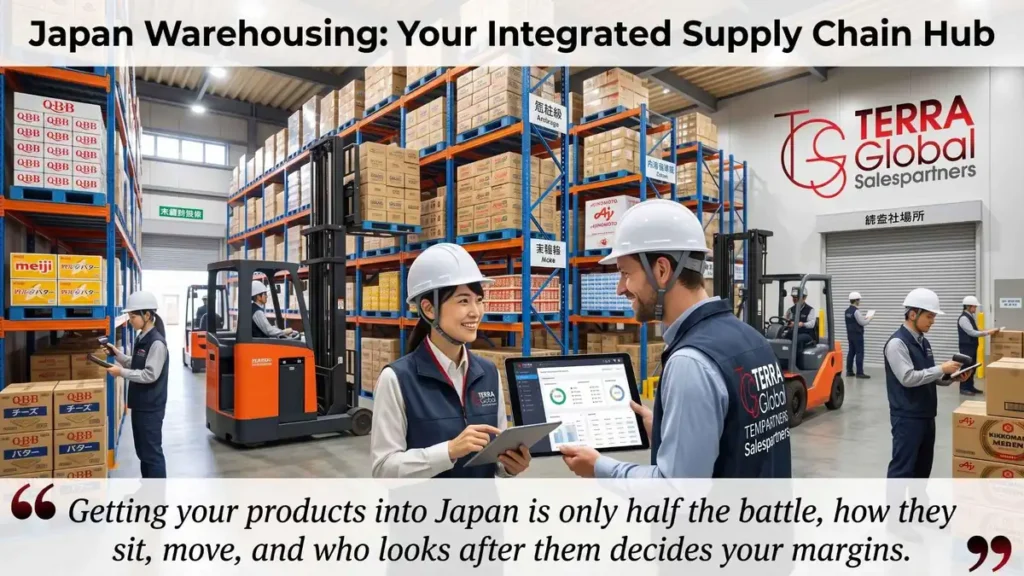
Getting your products into and out of Japan is only half the battle, where they sit, how they move, and who looks after them in between decides your margins. Japan warehousing gives importers a compliant, efficient home base within Japan for storage and delivery, from pallet-in receiving to final shipment. Whether you sell food, beauty, […]
Importing Japanese Beauty & Skincare: The PMDA Rules Global Brands Must Know
Planning to import Japanese cosmetics? Learn the PMD Act rules: MAH licence, cosmetic notification, Standards for Cosmetics, Japanese labels and customs.
Japan 3PL Services, How Third-Party Logistics Works for Global Importers?
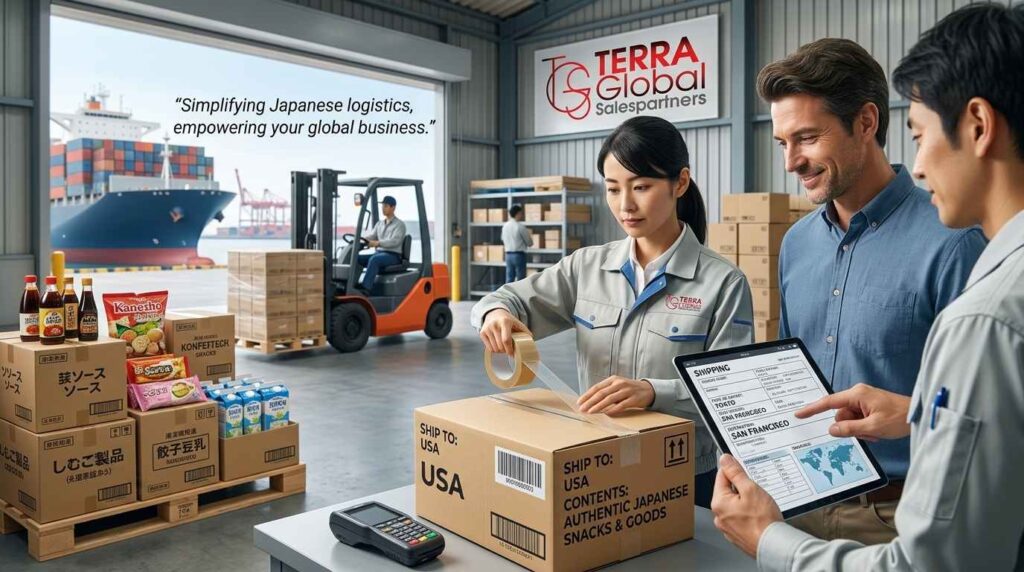
Most guides on Japan 3PL services either drown you in jargon or just scratch the surface. That is not what this guide is. Instead, this is a practical, experience-backed breakdown of how third-party logistics works in Japan, and why partnering with the right Japan fulfillment center can transform your import business. If you are sourcing […]