

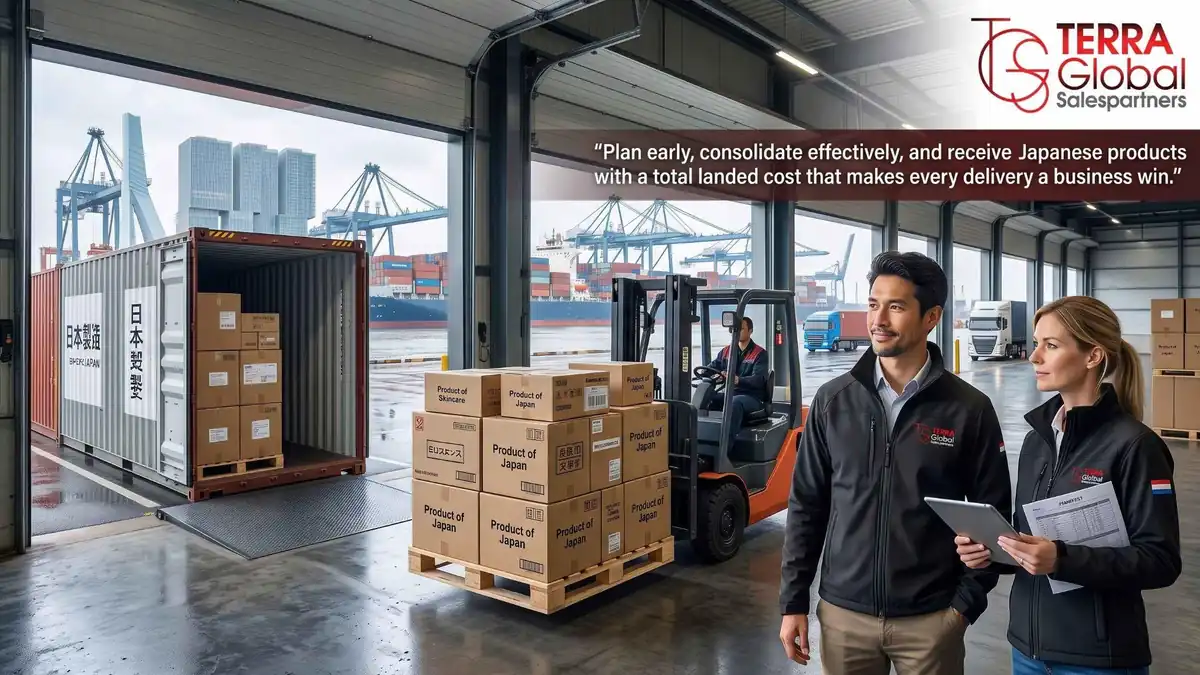
Europe’s shelves are filled with Japanese products, from skincare to snacks, and behind every pallet is a shipping from Japan plan that someone got right. For wholesale importers, shipping from Japan to Europe is a step-by-step guide in itself: choose the right shipping method, prepare export documentation from Japan, clear customs clearance, and manage last-mile delivery, all while protecting your cost-effectiveness.
This complete guide walks importers through the full journey, shipping method options, transit times, shipping rates, trade corridors via Singapore and the Suez Canal, and how to receive goods at a true total landed cost. Terra Global Sales Partners moves Japanese goods from Osaka, Tokyo, and Kobe to Rotterdam and beyond every week, consolidation, documentation, and reliable logistics handled by one team. A frequently asked questions section at the end answers the queries wholesalers ask most.
Import from Japan to Europe, Why Is International Shipping Booming for Wholesalers?
Japan is one of the world’s most trusted source markets: Japanese companies ship consumer products, skincare products, machinery, and food to Europe in ever-growing volumes. For any importer, import from Japan starts with demand, Japanese consumers set trends Europe follows, and ends with reliable suppliers who deliver on spec. Shipping from Japan rewards wholesalers who plan consolidation early: fuller containers, lower per-unit shipping cost, and better delivery time reliability.
Related: Air Freight vs Sea Freight from Japan · G-Shock Watch
The Right Shipping Method for Shipping from Japan, Sea vs Air Freight
Picking the right shipping method is the biggest lever on your international shipping cost. Sea freight suits heavy, non-urgent cargo, the workhorse of shipping from Japan to Europe, while air freight serves time-sensitive launches and restocks. Shipping from Japan by sea typically takes 30–40 days via the Suez Canal; air takes 3–7 days at several times the price.
Get a written cost estimate before you commit, and confirm whether the quote covers customs handling at the destination country or stops at the port. Logistics providers who itemize additional charges, terminal fees, documentation, freight transit insurance, save you from margin-killing surprises.
Related: How to Choose a Freight Forwarder in Japan: 7 Things to Check First · Acecook Super Cup 1.5x Miso Ramen 129g
International Shipping Rates and Transit Times, What Drives Cost?
Shipping rates move with fuel, season, and capacity. International shipping prices spike before Golden Week and year-end, so importers who book early lock preferential rates. Transit times depend on routing: direct sailings to Rotterdam beat transshipment via Singapore on speed, though Singapore can win on price for smaller loads.
Shipping from Japan gets cheaper per unit as volume grows, compare shipping cost per carton at different volumes before you decide. Shipping from Japan in consolidated loads also smooths transit times, since your forwarder controls the full container. Model the cost-effectiveness of sea-plus-warehousing versus air for every SKU before you lock the plan.
Related: How to Reduce Import Costs When Buying from Japan · Ajinomoto Hondashi Katsuo and Konbu 500g
Rotterdam and Beyond, Key European Ports and Trade Corridors

Most Japan to Europe ocean freight lands at Rotterdam, Europe’s largest port, then fans out by rail, barge, and truck. These trade corridors, Japan to Europe via the Suez Canal, or overland combinations, define your freight transit options and delivery time. Every supply chain has a weakest link, and on this corridor it is usually the port-to-warehouse handoff. Shipping from Japan through Rotterdam gives you bonded warehousing, package consolidation, and onward distribution in one hub.
Your customs broker clears goods at the port of entry, choose one experienced with Japanese goods and your product category. Osaka and Kobe departures feed the same corridors as Tokyo and Yokohama, so pick the origin port closest to your supplier.
Related: Importer of Record (IOR): What It Is and Why It Matters · Fanta Melon Soda
Export Documentation from Japan, Paperwork That Moves Your Shipment
Nothing moves without paper. Export documentation from Japan centers on three documents: the commercial invoice (what the goods are worth, your declared product value), the packing list (cardboard box counts, weights, marks), and the bill of lading (the carrier’s receipt and contract). Japanese exporters also supply a certificate of origin when you claim preferential rates under trade agreements.
Export regulations change, so watch regulatory updates from both sides. Shipping from Japan smoothly means your forwarder pre-checks every document before the container seals, one typo in a packing list can hold a shipment for days. For air cargo, the air waybill plays the billing role. Study the bill of lading before you sign one, it is a contract, not just a receipt.
Related: Import Export Process from Japan: Documents, Costs, Timeline Explained · Kikkoman Manjo Rich Aged Mirin 300ml
Customs Clearance in Europe, Duties, Import Regulations, and Product Compliance
Customs clearance is where import regulations meet your wallet. The destination country charges customs duties based on HS codes and declared value, plus consumption tax (VAT), in the Netherlands, for instance, VAT applies on the duty-paid value. Shipping from Japan with an experienced customs broker keeps customs procedures fast: pre-lodged entries, correct duty rates, and no inspection delays.
Product compliance is the quiet killer: CE marking, food-contact rules, cosmetics notifications, import requirements vary by category. Every customs declaration must match the commercial invoice exactly, or clearance stalls. Skipping compliance homework risks seizure or re-export at your expense, so have a partner pre-check labeling before goods sail. The customs authority in each country interprets shared EU rules with local quirks, local expertise matters.
Related: Customs Clearance in Japan: Your Complete Importer Guide · Aohata Spoon-Free Blueberry Jam 165g
Import Requirements and Packaging Requirements for Japanese Goods
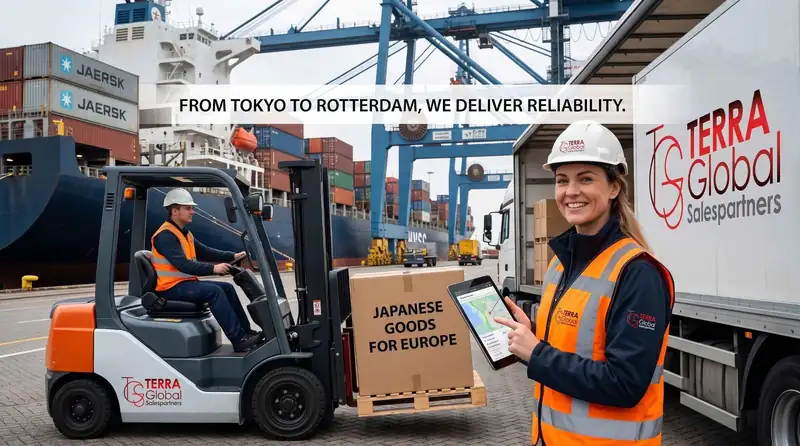
Import requirements start at the source, verified suppliers with export experience, proper labeling, and shelf-life documentation for food. Packaging requirements protect both product and margin, right-sized box specs cut dimensional weight, while custom crating guards fragile lines in stacked containers. Shipping from Japan rewards importers who specify packaging up front: crushed corners and moisture damage are the top claim categories on ocean routes.
Japanese goods like chilled dairy need validated cold-chain packaging, and a forwarder who actually checks it. Confirm your supplier photographs every pallet before it seals; that single habit resolves most damage disputes before they start.
Related: Quality Control Standards in Japan: What Global Buyers Must Know · Snow Brand 6P Cheese 102g
Suppliers and Exporters, Consolidation Strategies That Cut Costs
Working with multiple suppliers? Consolidation, gathering items from Japan at one warehouse before shipping internationally, slashes per-unit cost. Reliable suppliers share production schedules so your forwarder can plan pickups; Japanese exporters used to international trade make this easy.
A Japanese proxy or sourcing agent can buy products directly from makers who do not export, then consolidate everything into one load. Shipping from Japan this way turns five small, expensive shipments into one efficient container. Vet every partner: verified suppliers, clear contracts, and reliable logistics from dock to door.
Related: Japanese Food Wholesale: Your Global Sourcing Partner · Daisho BBQ Sauce Yuzu Flavour 185g
Parcel Shipping vs Freight, Japan Post, Express Couriers, and Pallets
Not everything needs a container. Parcel shipping via Japan Post suits samples, documents, and small B2B orders, the sender books online and tracking runs door to door. For heavier parcel volumes, compare shipping services on delivery time and cost estimate transparency before you commit.
Shipping from Japan as a parcel makes sense under roughly 30kg; above that, palletized sea freight or air freight wins on cost-effectiveness. High-value light goods, electronics, samples, limited editions, often travel best as insured parcel consignments with signature on delivery.
Related: Best Japanese Products for Amazon & Shopify Sellers · Asahi Ippon Manzoku Bar Protein Strawberry 39g
Receive Goods Smoothly, How to Calculate Total Landed Cost?

Smart importers buy on total landed cost, not unit price: product plus shipping cost, customs duties, consumption tax, customs handling, and inland delivery. Shipping from Japan with Terra Global Sales Partners means one cost estimate covering the whole chain, consolidation at origin, freight, customs clearance, and last-mile delivery, so the number you approve is the number you pay. Clear Incoterms keep everyone honest about who pays for what.
When you receive goods, check quantities against the packing list immediately and report damage inside the carrier’s claim window. Terra’s shipping services pair reliable logistics with bilingual support, so claims and queries get answered in hours, not weeks.
Related: Why Terra Global Sales Partners Is a Trusted Trading Partner in Japan · Ajinomoto Pure Select Mayonnaise 400g
Conclusion
Shipping from Japan to Europe rewards importers who plan: the right shipping method, clean export documentation from Japan, a sharp customs broker, and honest total landed math. This complete guide gave you the step-by-step guide framework, a reusable guide to importing for every buying season, now execute it with a partner who does this daily. Terra Global Sales Partners handles international shipping from source to destination country: consolidation, freight, customs clearance, and delivery under one roof.
Ready to ship your next order? See our Japan to Europe shipping service or request a landed-cost quote from Terra Global Salespartners.
FAQs
How long does Japan-to-Europe shipping take?
Sea freight takes 30–40 days via the Suez Canal; air freight takes 3–7 days. Add customs clearance and inland delivery time.
What documents do I need to import from Japan?
Commercial invoice, packing list, bill of lading (or air waybill), and certificate of origin for preferential duty rates.
How can I reduce my international shipping cost?
Consolidate shipments, book early, compare sea versus air per carton, and use a forwarder who itemizes all charges.
Do I need a customs broker in Europe?
Yes, for commercial imports. A broker files entries, pays duties and VAT, and keeps customs procedures moving without delays.
What is the total landed cost?
Product price plus shipping, duties, consumption tax, customs handling, and inland delivery, the true cost of received goods.