

Terra Global Logistics Desk – Tokyo
Japan to Europe Shipping Sea Freight, Air Freight and Import Basics for the EU and UK
Shipping from Japan to Europe means choosing a mode, booking space, clearing export in Japan, meeting EU or UK entry rules, and paying the right duty and VAT on arrival. Terra Global Salespartners is a Tokyo-based trading and logistics company that helps overseas buyers source in Japan, consolidate cargo, prepare export documents and book sea or air freight to European ports and airports. Below: routes, typical transit ranges, documents, ICS2 / EORI, preferential origin, and the steps that keep shipments moving.
Choose by volume, urgency and total landed cost — not freight alone.
Rotterdam, Hamburg, Antwerp, Felixstowe / London Gateway and more.
Invoice, packing list, B/L or AWB and origin statements prepared.
We talk to suppliers and carriers in Japanese; you get updates in English.
Key Takeaways
Japan to Europe shipping in brief- Mode first, then laneSea FCL for full loads, LCL for shared containers, air when time matters more than cost.
- Typical times varyWest Europe sea is often about 30–40 days port-to-port; air door-to-door commonly 4–6 days — always confirm the sailing or flight.
- ICS2 / ENS before arrivalEU-bound cargo needs an Entry Summary Declaration in ICS2 for safety and security checks.
- EORI and VAT at importEU importers need an EORI; duty and import VAT follow classification, value and origin.
- EPA / CEPA can cut dutyQualifying Japanese origin goods may claim preference with a statement on origin (EU EPA or UK CEPA).
Routes and Gateways
Which Ports Handle Shipping from Japan to Europe?
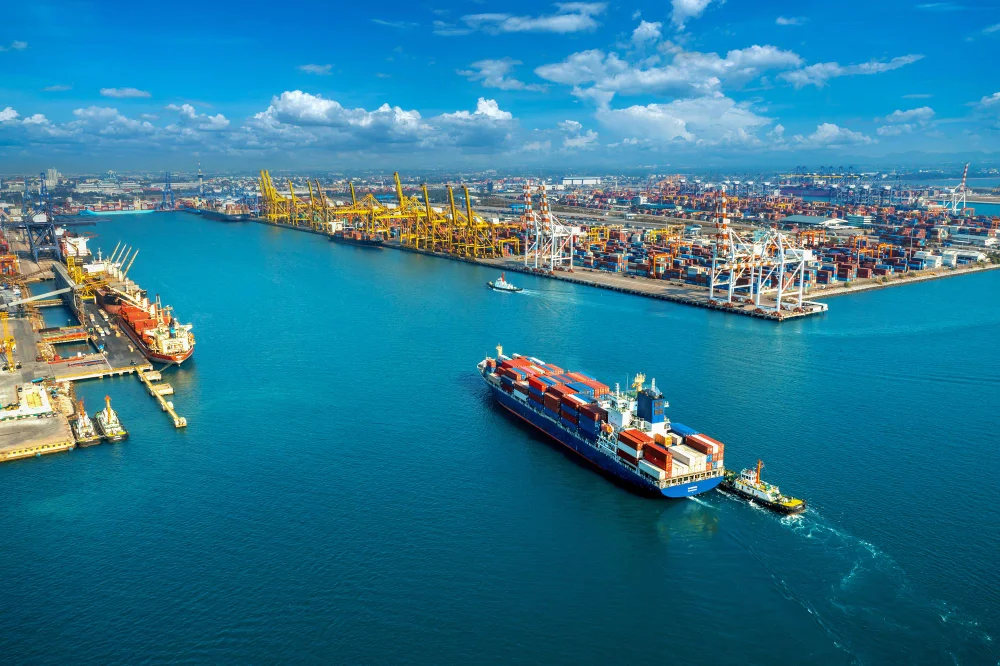
Most commercial Japan–Europe ocean cargo lands at a handful of North Europe base ports, then moves inland by feeder, rail or truck. Air freight uses major European cargo airports connected to Japan’s hubs.
Japan origin ports are usually Tokyo / Yokohama (Tokyo Bay), Nagoya, Osaka / Kobe and other regional terminals. Your booking should name the load port, the European discharge port, and whether you need port-to-port or door delivery.
Europe’s largest container hub, with strong feeder links into Germany, Benelux and France.
Main German gateway for Japan to Germany shipping by sea, with strong rail and truck inland links.
Major North Europe hub beside Rotterdam; useful for Benelux and inland EU distribution.
Common UK deep-sea gateways for Japan to UK shipping (UK customs, separate from the EU).
Le Havre, Southampton and Mediterranean hubs appear on some rotations — pick the port closest to your warehouse.
Frankfurt, Amsterdam, Paris CDG and London Heathrow commonly receive freighter and belly cargo from Narita, Haneda and Kansai.
Port choice is a cost and lead-time decision: the cheapest ocean rate can cost more if inland haulage is long or if your buyer’s warehouse sits closer to another gateway.
Choosing a Mode
Sea FCL vs LCL vs Air Freight Japan to Europe
Pick the mode that matches volume, urgency and total landed cost — freight is only one line on the import bill.
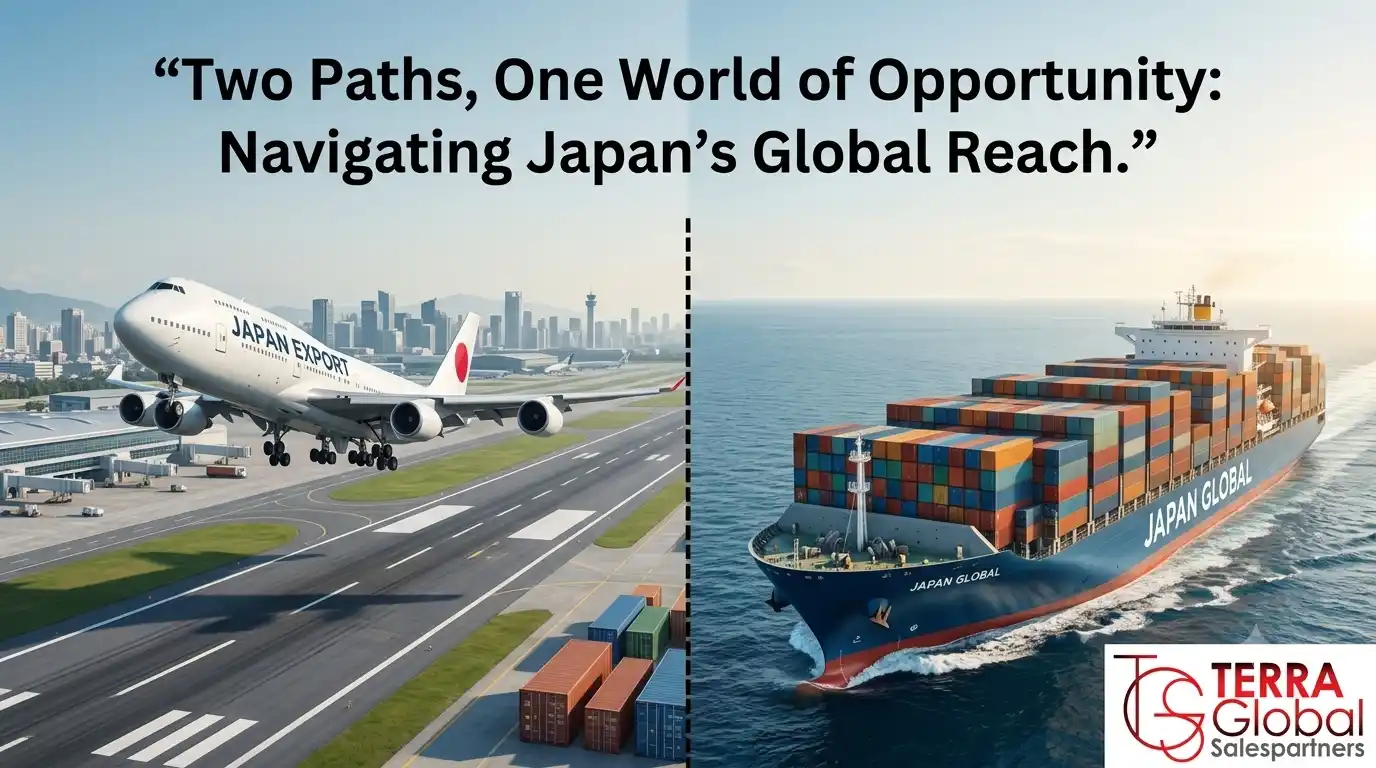
Short answer: use sea freight Japan to Europe (FCL) when you can fill most of a container and wait weeks; LCL for smaller lots; air freight Japan to Europe when a few days protect margin or a launch date.
How to decide in practice
Add up product cost, ocean or air freight, Japan export fees, destination terminal charges, duty, import VAT (often reclaimable for VAT-registered businesses), inland delivery and the cost of time (inventory, launch dates, stock-outs).
LCL suits market tests; FCL fits stable CBM. Air covers samples, replenishment and high-value goods — see air freight vs sea freight from Japan.
Transit ranges above follow typical West Europe figures published in Terra Global’s air-vs-sea guide (air about 4–6 days door-to-door; sea FCL about 30–40 days; LCL about 25–35 days). Carrier routings change (including Cape of Good Hope diversions). Treat every number as typical, not guaranteed.
Lead Times
How Long Does Japan to Europe Shipping Take?
There is no single transit time. Port pair, carrier service, direct vs transshipment, congestion and whether you book door-to-door all change the calendar.
Typical ranges (not guarantees): for West Europe, sea FCL is often about 30–40 days port-to-port and air about 4–6 days door-to-door, based on figures in our published air freight vs sea freight guide. Ask for a schedule-based estimate for your load week.
Asia–Europe ocean schedules published by carriers (for example ONE’s Japan–North Europe services calling Rotterdam and Hamburg) change by week and by routing. Red Sea / Cape of Good Hope diversions have lengthened some Asia–Europe voyages compared with older Suez-based norms. Always verify the booking’s ETD/ETA.
Paperwork
Documents Checklist for Japan to Europe Shipping
Most delays start with incomplete or inconsistent paperwork — not with the vessel. Prepare these before cargo is ready to leave Japan.
Core set: commercial invoice, packing list, B/L or AWB, Japan export declaration, and — if claiming preference — a statement on origin. Add product licences and ISPM-15 marks when they apply.
- Commercial invoiceSeller, buyer, description, quantities, unit prices, currency, Incoterms, country of origin.
- Packing listMarks, package count, net/gross weight, dimensions / CBM — must match the invoice and the physical cargo.
- Bill of lading or air waybillSea B/L (or sea waybill) / air AWB issued after departure; keep originals or telex-release instructions clear.
- Export declaration (Japan)Filed to Japan Customs (usually via NACCS) before the goods leave — see customs clearance in Japan.
- Statement on origin (if claiming preference)For Japan–EU EPA or UK–Japan CEPA preferential duty: exporter’s statement on origin on a commercial document (not a separate “certificate” form in the old sense).
- Product compliance papersCE / UKCA evidence, SDS, food health certificates, phytosanitary, radio/electrical conformity — only when your product category requires them.
- ISPM-15 for wood packagingRaw wood pallets and crates generally need ISPM-15 heat treatment / marking for EU and UK entry.
- Importer identifiersEU: EORI (and VAT number where relevant). UK: GB EORI after Brexit. Your destination broker will ask for these early.
Descriptions on the invoice, packing list and booking must match. Vague lines invite ICS2 referrals and customs queries at destination.
EU Entry Rules
ICS2, ENS and EORI — Clear Definitions
Three acronyms show up on almost every Japan–EU shipment. Here is what each one means in plain language, with official sources.
What is ICS2?
Import Control System 2 (ICS2) is the EU’s advance cargo information system. Economic operators that bring goods into or through the EU must lodge safety and security data through an Entry Summary Declaration (ENS) so customs can run risk analysis before or on arrival.
Source: European Commission — ICS2What is an ENS?
An Entry Summary Declaration is the electronic safety and security filing submitted into ICS2. For maritime containerised deep-sea cargo, complete ENS data is generally due 24 hours before loading on the vessel bound for the EU. Air also needs a pre-loading minimum dataset.
Source: European Commission — ICS2What is an EORI number?
An Economic Operators Registration and Identification (EORI) number is a unique ID from an EU customs authority. It is mandatory for import, export and transit operations in the EU. EU businesses register in their member state; non-EU operators register where they first lodge a relevant declaration.
Source: European Commission — EORIPractical tip: your carrier or forwarder usually lodges the ENS, but they need accurate cargo descriptions, consignee details and your EORI early. Incomplete data can trigger referrals or delays (European Commission ICS2 guidance).
For UK imports, remember the UK runs its own customs system after Brexit. A GB EORI is the usual identifier for UK import entries — see GOV.UK on EORI.
Duty, VAT and Trade Deals
Import Duty, VAT and Preferential Origin (Japan–EU EPA & UK–Japan CEPA)
Duty and VAT are calculated at import. Preferential origin under the Japan–EU EPA or the UK–Japan CEPA can reduce or remove customs duty when the product qualifies and you claim correctly.
How EU import duty and VAT work (basics)
EU customs classify goods with a Combined Nomenclature (CN) code based on the HS system. That code, together with customs value and origin, drives the duty rate. You (or your broker) lodge an import declaration; goods are released for free circulation after applicable duty, VAT and any excise are paid or secured, and other rules are met. Overview: Your Europe — customs duties and import procedures.
Import VAT is charged by the member state of import (usually on customs value + duty + certain charges). VAT-registered businesses often reclaim it on their return — confirm with your accountant; this is not tax advice.
Japan–EU EPA: statement on origin
Definition: under the EU–Japan EPA, preferential origin is normally claimed with a statement on origin made out by the exporter on an invoice or other commercial document that identifies the goods — not an old-style stamped certificate. It follows Annex 3-D wording, includes the exporter reference (for Japanese exporters, typically the Japan Corporate Number) and is generally valid for 12 months. Sources: Access2Markets — statement on origin; Japan Customs Annex 3-D.
Japan to UK shipping: CEPA after Brexit
The UK is not in the EU customs union. Japan to UK shipping uses UK import procedures and, for preferential duty, the UK–Japan Comprehensive Economic Partnership Agreement (CEPA). CEPA also uses self-certification via a statement on origin (and, in some cases, importer’s knowledge). See GOV.UK CEPA rules of origin explainer and Japan Customs CEPA statement on origin text.
Preferential rates apply only when the product meets the product-specific rules of origin and the claim is made correctly. “Made in Japan” on a label is not automatically enough. Keep supplier declarations and production records in case of verification.
From Factory to Door
Japan to Europe Shipping Process: Step by Step
A clear sequence prevents last-minute holds. Adapt the steps to your Incoterms and whether Terra Global handles only Japan-side work or also destination coordination.
In short: confirm compliance → choose mode → consolidate and document in Japan → export clear and sail/fly → advance security filing → import clear and deliver.
Confirm product and destination rules
HS / CN idea, restricted-goods checks, CE / UKCA or food rules, and whether you will claim EPA or CEPA preference.
Lock volume, Incoterms and mode
FCL, LCL or air; EXW / FOB / CIF / DAP etc.; who pays destination charges.
Source, inspect and consolidate in Japan
Buy or collect from suppliers, check quantity and condition, pack for export — see proxy agent in Japan and warehousing in Japan.
Prepare export documents
Invoice, packing list, origin statement if needed, permits, ISPM-15 packaging.
Book the carrier and file Japan export clearance
Space allocation, cut-offs, export declaration through NACCS.
ICS2 / ENS (EU) or UK safety filings as required
Carrier / forwarder lodges advance data; you supply accurate party and cargo details.
Arrival, import entry, duty and VAT
Destination broker clears with your EORI; pay or secure duty and import VAT.
Inland delivery and proof of delivery
Drayage, depot, warehouse or Amazon FBA appointment — confirm labelling rules early.

What We Handle
What Terra Global Does for Japan to Europe Shipping
We sit on the Japan side of your supply chain: product, packing, papers and the booking — so European importers are not left coordinating factories and carriers in Japanese alone.
Terra Global Salespartners LLC is based in Ginza, Tokyo (established 10 October 2022). Corporate information lists import-export, customs brokerage and shipping agency among its main lines. On Europe lanes we focus on Japan-origin work; destination customs is completed with your local broker.
Supplier search, domestic payment and bilingual negotiation — proxy agent Japan.
Count, photo-check and combine multi-supplier orders into one export shipment — warehousing Japan.
Commercial set, packing details, HS support and preferential origin statements when goods qualify.
Sea FCL / LCL or air bookings toward European ports and airports, with cut-off management.
Arrange the Japan-side declaration and bonded handovers as part of the shipment — customs clearance Japan.
EU/UK import entry is filed by a broker there; we prepare matching papers and share data so clearance is not a surprise.

Related Japan logistics pages
Open in the same siteAvoid Delays
Common Mistakes When Shipping from Japan to Europe
Most problems are predictable. Fix them on the Japan side before the container seal goes on.
Pattern to watch: incomplete data and late importer IDs cause more holds than weather. Put a document cut-off in your production plan.
Write precise commercial descriptions and HS ideas early. “General merchandise” causes ENS and customs friction.
Mismatched weights, piece counts or SKUs trigger examinations. Recount before sealing.
Destination brokers need importer identifiers before the vessel berths or the flight lands.
Preference needs qualifying rules of origin plus a valid statement on origin (EPA or CEPA).
Non-ISPM-15 pallets can be refused or re-worked at destination.
Capacity tightens before holidays. Lock space when the sales date is fixed.
A shipment cleared in Rotterdam is not automatically cleared for the UK. Japan to UK shipping needs a UK import entry.
Cheap freight with the wrong port or slow inland can erase savings. Compare landed cost.
Clarity and Answers
Frequently Asked Questions About Japan to Europe Shipping
Straight answers for importers planning shipping from Japan to Europe or the UK. For USA lanes, see Japan to USA shipping.
What is the cheapest way to ship from Japan to Europe?
Usually sea FCL when you nearly fill a container; LCL for smaller lots. Air rarely wins on freight cost, but can win on total cost when speed protects sales. Compare landed cost, not the ocean rate alone.
How long is sea freight Japan to Europe?
As a planning guide, West Europe sea FCL is often about 30–40 days port-to-port and LCL about 25–35 days, based on Terra Global’s published air-vs-sea transit table. Confirm the specific vessel schedule; routings and congestion change.
How long is air freight Japan to Europe?
Door-to-door air is often about 4–6 days to West Europe including handling, per the same guide. Airport-to-airport flight time on direct or one-stop services is shorter.
Do I need an EORI number to import into the EU?
Yes for normal commercial customs operations. An EORI uniquely identifies you to EU customs. Register in the member state where your business is established, or — if you are outside the EU — where you first lodge a relevant declaration. Official page: European Commission EORI.
What is ICS2 and who files the ENS?
ICS2 is the EU advance cargo security system. The ENS is lodged into ICS2 before arrival (air also needs a pre-loading dataset). Carriers and other parties share filing duties by contract; you must still supply accurate data.
How does Japan to UK shipping differ after Brexit?
The UK has separate customs from the EU. Goods need a UK import declaration and usually a GB EORI. Preferential duty, if claimed, follows UK–Japan CEPA — not the EU–Japan EPA.
Can I get zero or reduced duty under the Japan–EU EPA?
If the product originates under the EPA rules and you claim preference with a valid statement on origin (or, where allowed, importer’s knowledge), duty can be reduced or removed. Check the product-specific rule before you promise a customer a zero rate.
Which documents should I prepare first?
Commercial invoice, packing list, transport document, Japan export declaration, importer EORI, and — if claiming preference — the statement on origin. Add compliance certificates for your product category.
Can you ship to Germany, France, the Netherlands and the UK?
Ocean and air networks connect Japan with those markets via hubs such as Hamburg (strong for Japan to Germany shipping), Rotterdam, Antwerp and UK deep-sea ports. Tell us the final delivery postcode so we can recommend a discharge port and mode.
General information only — not legal, customs or tax advice. Official references include the European Commission ICS2 page, EORI, Your Europe import procedures and GOV.UK EORI.
Europe / UK Freight Inquiry
Get a Japan to Europe Shipping Quote
Tell us what you are moving, where it must land, and when you need it. We will suggest sea FCL, LCL or air, list documents to prepare, and quote Japan-side work plus freight options.
Ginza Ohtake Residence 2F, 1-22-11 Ginza, Chuo-ku, Tokyo 104-0061, Japan
What to Include in Your Request
Send these via our contact page — clearer briefs get faster, more accurate quotes.
- 01Commodity, rough HS code and destination country (EU member state or UK)
- 02Pieces, weight and CBM (or dimensions)
- 03Preferred mode and Incoterms if known
- 04Need preferential origin statement? (EPA / CEPA)
- 05Company name, EORI if you have one, and business email